






Who Am I by Ramana Maharshi: A Comprehensive Exploration
Ramana Maharshi’s “Who Am I?” is widely available as a PDF, offering accessible spiritual guidance; platforms like Stripchat even indirectly highlight the search for self-discovery.
Ramana Maharshi (1879-1950) was an Indian sage revered for his profound teachings on self-inquiry. Born Venkataraman Iyer, he experienced a spiritual awakening at age sixteen, leading him to renounce worldly life and dedicate himself to realizing the truth of existence. He settled on Arunachala, a sacred mountain in Tamil Nadu, and became known as Ramana Maharshi, meaning “great sage.”
His teachings, primarily conveyed through silence and direct experience, centered on the question “Who am I?” – a powerful tool for dismantling the ego and discovering one’s true Self. The accessibility of his work, including the widely circulated PDF version of “Who Am I?”, has made his teachings globally influential. Even platforms seemingly unrelated, like live streaming sites, reflect a human yearning for connection and self-understanding, mirroring the core of Ramana’s message.
The Core Teaching: Self-Inquiry
Self-inquiry, the cornerstone of Ramana Maharshi’s teachings, is a direct path to realizing one’s true nature. It involves relentlessly questioning the source of the “I-thought.” Rather than intellectual analysis, it’s a turning inward of attention, persistently asking “Who am I?” to trace the ego back to its origin.
This isn’t a mental exercise, but a deep dive into consciousness. The goal isn’t to find an answer, but to be the question, dissolving the sense of separate self. The readily available PDF of “Who Am I?” meticulously outlines this process. Interestingly, even modern platforms offering live interaction, like Stripchat, demonstrate a fundamental human drive to connect and understand oneself, echoing the essence of self-inquiry.
The Significance of “Who Am I?”
“Who Am I?” stands as a concise yet profoundly impactful exposition of Ramana Maharshi’s teachings. Its significance lies in its directness and accessibility, offering a practical method for self-realization stripped of complex philosophical jargon. The text, widely circulated as a PDF, provides a foundational understanding of Advaita Vedanta through the lens of self-inquiry.
Unlike many spiritual texts, it doesn’t rely on faith or belief, but on direct experience. It’s a guide to dismantling the illusion of the ego and discovering the inherent truth of one’s being. Even seemingly unrelated online spaces, like Stripchat, reflect a human yearning for authentic connection, mirroring the core message of self-discovery within the work;

Understanding the Text “Who Am I?”
Ramana Maharshi’s “Who Am I?” exists readily as a PDF, facilitating widespread study of his direct path to self-realization and inner peace.
Historical Context of the Book’s Creation
Ramana Maharshi’s “Who Am I?” (Nan Yar?) wasn’t initially intended as a formal book. It originated in 1923 as a written response to a series of questions posed by a devotee, Ganapati Muni. This devotee earnestly sought clarification on Maharshi’s core teachings, specifically the practice of self-inquiry.
The resulting text, initially penned in Tamil, was later translated into Telugu and then into English. The PDF versions circulating today are derived from these translations. The context of its creation is crucial; it wasn’t a systematic treatise but a direct, concise answer to practical spiritual inquiries.
Interestingly, even amidst discussions of adult entertainment platforms like Stripchat – reflecting a modern search for connection – the timeless relevance of Maharshi’s work persists. The original manuscript’s simplicity reflects Maharshi’s emphasis on direct experience over intellectual understanding, a quality preserved in the widely available PDF format.
The Questioning Method Explained
The central method in “Who Am I?” is relentless self-inquiry, specifically the question “Who am I?”. This isn’t an intellectual exercise seeking a definitional answer, but a direct plunge into the source of the ‘I’-thought. Maharshi advocates turning inward, tracing the origin of self-awareness.
The PDF versions of the text emphasize this process: continually asking “Who am I?” until the mind is stilled and the illusory ego dissolves. It’s a stripping away of identifications – with the body, mind, and external world – to reveal the underlying reality.
Even seemingly unrelated online spaces, like live-streaming platforms such as Stripchat, demonstrate a human drive for self-exploration; However, Maharshi’s method differs; it’s not about seeking external validation but internal realization, readily accessible through studying the PDF.
The Structure and Format of the Work
“Who Am I?” isn’t a traditionally structured philosophical treatise. Instead, it’s presented as a concise record of responses given by Ramana Maharshi to a disciple’s questions. The PDF format faithfully reproduces this question-and-answer style, making it remarkably direct and accessible.
The text unfolds logically, starting with the fundamental question and progressively clarifying related concepts. It avoids complex jargon, favoring simple, precise language. The brevity of the work – easily contained within a PDF document – belies its profound depth.
Interestingly, even platforms like Stripchat, with their interactive formats, reflect a desire for direct engagement. However, “Who Am I?” offers a different kind of interaction – a dialogue with the self, facilitated by the clear, uncluttered presentation found in the PDF version.

Key Concepts Within “Who Am I?”
PDF versions of “Who Am I?” reveal core tenets: the illusory ego, the true Self (Atman), and the power of self-inquiry for liberation.
The Nature of the Self (Atman)
Ramana Maharshi’s exploration of Atman, as detailed in readily available PDF versions of “Who Am I?”, centers on the concept of pure consciousness. He posits that the Self is not the body, mind, or ego, but rather the underlying reality that illuminates them. This true Self is eternal, unchanging, and beyond all limitations.
The PDF clarifies that identifying with the body and mind creates suffering, as these are transient and subject to change. Through self-inquiry – persistently asking “Who am I?” – one can dis-identify with these false notions and realize their true nature as pure being. This realization isn’t an intellectual understanding, but a direct experiential knowing. Platforms like Stripchat, in a contrasting way, also represent a search for connection, though through different means, highlighting humanity’s inherent desire for wholeness.
Ultimately, Atman is synonymous with Brahman, the ultimate reality, and realizing this unity is the goal of spiritual practice.
The Illusion of the Ego (Ahamkara)
Ramana Maharshi’s “Who Am I?”, accessible as a PDF, meticulously deconstructs the illusion of the ego, or Ahamkara. He explains that the ego is a mental construct, a false sense of self built upon identifications with the body, mind, and possessions. This fabricated identity is the root cause of suffering, creating a sense of separation and limitation.
The PDF emphasizes that the ego is not the true Self, but a temporary appearance arising within consciousness. By relentlessly questioning “Who am I?”, one can trace the ego back to its source and discover its emptiness. This process isn’t about destroying the ego, but about seeing through its illusion. Even platforms like Stripchat, focused on immediate gratification, indirectly point to the ego’s desires and vulnerabilities.
Realizing the illusory nature of the ego leads to freedom and peace, as one identifies with the boundless reality beyond it.
The Role of the Mind (Manas)
Ramana Maharshi’s “Who Am I?”, readily found as a PDF, details the mind’s (Manas) crucial, yet ultimately limited, role in our experience. He doesn’t dismiss the mind, but clarifies it’s a tool, not the true Self. The mind constantly generates thoughts, emotions, and perceptions, creating the world we perceive. However, these are all modifications within consciousness, not consciousness itself.
The PDF explains that identifying with the mind’s content leads to entanglement and suffering. The incessant mental chatter obscures our true nature; Self-inquiry, the core practice, aims to quiet the mind and turn attention inward, towards the source of thought. Even seemingly disparate platforms like Stripchat demonstrate the mind’s capacity for distraction and desire.
Ultimately, the mind is a temporary phenomenon, dissolving when the Self is realized.
Distinguishing Between the Real and the Unreal
Ramana Maharshi’s “Who Am I?”, accessible as a PDF, centers on discerning the Real (that which is unchanging and eternal) from the Unreal (the transient world of forms and perceptions). The world we experience through our senses is considered Unreal – a projection of the mind, constantly shifting and impermanent. This isn’t to say it doesn’t appear real, but its reality is dependent on perception.
The Real, according to Maharshi, is the Self, the underlying consciousness that remains constant despite all changes. The PDF emphasizes that true liberation comes from realizing this distinction. Even platforms offering immediate gratification, like Stripchat, highlight the fleeting nature of sensory experiences.
Self-inquiry is the method to unveil the Real, stripping away layers of illusion to reveal the unchanging core.

Practical Application of Self-Inquiry
“Who Am I?”, often read as a PDF, encourages consistent self-questioning; even platforms like Stripchat prompt internal reflection on desires and identity.
Preparing for Self-Inquiry Practice
Before embarking on self-inquiry, as detailed in the widely accessible PDF version of “Who Am I?”, cultivate a quiet and peaceful environment. Minimize distractions, both external and internal. This doesn’t necessitate elaborate rituals, but a deliberate setting apart of time and space is beneficial.
Ramana Maharshi emphasized the importance of mental stillness. While complete cessation of thought isn’t immediately achievable, reducing mental chatter prepares the ground for deeper investigation. Consider simple meditation techniques to calm the mind.
Furthermore, approach the practice with sincerity and humility. Avoid intellectualizing the process; it’s not about finding a clever answer, but about direct experience. Even seemingly unrelated online spaces, like live streaming platforms, can inadvertently highlight the human search for connection and self-understanding, subtly preparing one for introspection.
Dealing with Obstacles During Practice
As outlined in the PDF of “Who Am I?”, obstacles during self-inquiry are inevitable. The mind, accustomed to external focus, will resist turning inward. Common hurdles include wandering thoughts, emotional disturbances, and physical discomfort. Don’t fight these; simply acknowledge them without judgment and gently redirect your attention back to the question, “Who am I?”
Persistent thoughts often reveal underlying anxieties or desires. Observe them as passing phenomena, not as defining aspects of the self. Even distractions stemming from modern life – the allure of online entertainment, for example – can be seen as opportunities to practice detachment.
Ramana Maharshi advised perseverance. Consistency is key; regular practice, even for short durations, yields greater results than sporadic, lengthy sessions.
The Importance of Consistency
The “Who Am I?” PDF emphasizes that consistent self-inquiry is paramount. Sporadic, intense sessions are less effective than regular, shorter practices. Just as physical fitness requires ongoing effort, spiritual progress demands sustained attention to the core question. Ramana Maharshi didn’t prescribe a rigid schedule, but advocated for daily dedication.
Even five or ten minutes of focused inquiry can create a powerful shift in awareness. The goal isn’t to achieve a specific state, but to cultivate a habit of turning inward. This consistent practice gradually weakens the grip of the ego and reveals the underlying reality.
Treat self-inquiry as a non-negotiable appointment with yourself, prioritizing it amidst the demands of daily life.
Integrating Self-Inquiry into Daily Life
The “Who Am I?” PDF doesn’t advocate for isolating spiritual practice; instead, it encourages weaving self-inquiry into everyday activities. While formal sessions are valuable, the real transformation occurs when awareness extends beyond meditation.
Throughout the day, pause and ask yourself, “Who am I?” when encountering thoughts, emotions, or sensations. Observe them without identification, recognizing they arise within awareness, not as awareness. This transforms mundane moments into opportunities for self-discovery.
Even seemingly trivial tasks – washing dishes, commuting, or interacting with others – can become vehicles for inquiry. The key is to maintain a gentle, persistent curiosity about the source of your experience.

Ramana Maharshi’s Influence on Hindu Philosophy
The accessible “Who Am I?” PDF revitalized Advaita Vedanta, emphasizing direct experience over intellectual understanding, mirroring platforms like Stripchat’s focus on immediacy.
Connection to Advaita Vedanta
Ramana Maharshi’s teachings, particularly as presented in the readily available “Who Am I?” PDF, are deeply rooted in Advaita Vedanta, a non-dualistic school of Hindu philosophy. However, his approach was remarkably direct and experiential, bypassing complex scriptural interpretations. He emphasized self-inquiry – the relentless questioning of “Who am I?” – as the most effective path to realizing one’s true nature, which is identical to Brahman, the ultimate reality.
Unlike traditional Advaita, which often relies on elaborate philosophical arguments, Ramana Maharshi offered a practical method accessible to all, regardless of background or belief. The PDF format of “Who Am I?” further democratizes this wisdom, allowing widespread access to his core teachings. This resonates with a modern desire for immediate experience, a sentiment echoed even in seemingly unrelated digital spaces like live-streaming platforms, where individuals seek authentic connection.
Symbolism and the Unconscious
Ramana Maharshi, through works like “Who Am I?” – easily found as a PDF – indirectly addressed the realm of symbolism and the unconscious. While not explicitly psychoanalytic, his method of self-inquiry bypasses the conscious mind’s narratives, tapping into deeper layers of awareness. The symbols encountered during meditation or introspection aren’t interpreted intellectually, but rather used as pointers towards the source of consciousness.
His visit to the Vedagiriswarar Temple and contemplation of the gopuram’s sculptures demonstrate an understanding of symbolic language. These images, like dreams, reflect the unconscious mind’s contents. Even the modern pursuit of live interaction, as seen on platforms like Stripchat, can be viewed as a search for authentic self-expression, a surfacing of unconscious desires. The PDF facilitates this inward journey.
Vedagiriswarar Temple and Symbolic Understanding
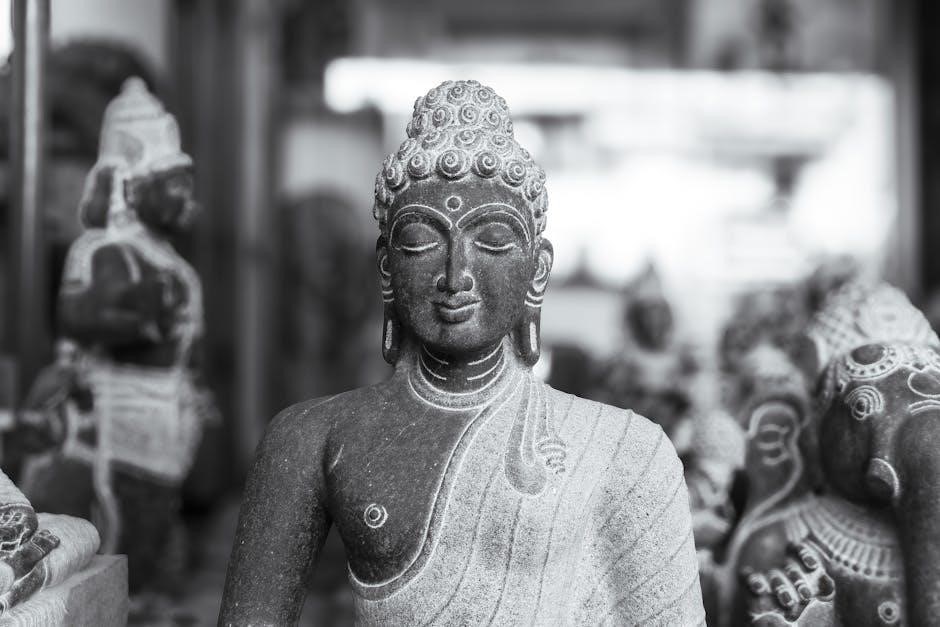
Ramana Maharshi’s visit to the Vedagiriswarar Temple, documented and accessible through resources like the “Who Am I?” PDF, reveals his engagement with symbolic representation. He engaged in conversation with a local expert regarding the temple’s gopuram sculptures, recognizing them as visual expressions of deeper spiritual truths. This wasn’t mere intellectual curiosity; it was an exploration of how symbolism points beyond itself, towards the underlying reality.
The temple, a microcosm of the universe, embodies archetypal forms and narratives. Even seemingly unrelated modern platforms, like Stripchat, offer a different kind of symbolic landscape – a raw expression of human desires. Maharshi’s approach, detailed in the PDF, encourages looking through symbols to the source of consciousness, rather than getting lost in their interpretations.
The PDF Format and Accessibility
“Who Am I?” as a PDF ensures widespread access to Ramana Maharshi’s teachings, mirroring platforms like Stripchat’s accessibility to diverse audiences globally.
Finding Reliable PDF Versions Online
Locating a trustworthy PDF version of “Who Am I?” requires careful navigation of online resources. Several websites dedicated to spiritual texts offer the work, but verifying authenticity is crucial. Look for sources affiliated with recognized Ramana Maharshi centers or ashrams, as these are more likely to provide accurate transcriptions.
Beware of sites hosting potentially corrupted or altered versions. Project Gutenberg and similar digital libraries can be good starting points, though cross-referencing with other sources is advisable.
Interestingly, the ease of finding this text digitally parallels the accessibility of modern platforms like Stripchat, though the content differs vastly; both demonstrate the power of digital distribution. Prioritize PDFs from reputable publishers or organizations to ensure a faithful representation of Maharshi’s original teachings.

Benefits of Reading the PDF
Reading “Who Am I?” in PDF format offers several advantages. The digital format allows for convenient access on various devices – computers, tablets, and smartphones – facilitating study anytime, anywhere. Search functionality enables quick location of specific passages or concepts, aiding deeper understanding.
Furthermore, PDFs are easily shareable, allowing you to distribute this valuable text to others seeking spiritual guidance. The ability to highlight and annotate directly within the PDF promotes active engagement with the material.
While seemingly disparate, the instant access of a PDF mirrors the immediacy of platforms like Stripchat, though serving vastly different purposes; both offer readily available content. A digital copy preserves the text’s integrity and ensures long-term availability, fostering continued exploration of Ramana Maharshi’s teachings.
Digital vs. Physical Copies
Choosing between a PDF and a physical copy of “Who Am I?” depends on individual preference. The PDF excels in portability and accessibility, mirroring the instant gratification found on platforms like Stripchat, though applied to spiritual seeking. It’s cost-effective, often free, and environmentally friendly.
However, a physical book offers a tactile experience, free from digital distractions. Some readers find the act of turning pages and annotating in the margins enhances comprehension and retention. The absence of screen glare can also be beneficial for extended reading sessions.
Ultimately, both formats deliver the same core teachings. The PDF prioritizes convenience, while the physical copy emphasizes a more traditional, immersive reading experience. Consider your learning style and reading habits when making your choice.

Criticisms and Common Misunderstandings
Skeptics question self-inquiry’s practicality, while others intellectualize it, missing the direct experience; even platforms like Stripchat offer varied interpretations.
Addressing Skepticism About Self-Inquiry
Many initially dismiss self-inquiry as overly simplistic or impractical, questioning how merely asking “Who am I?” can dismantle deeply ingrained egoic structures. Some argue it’s an intellectual exercise, leading to conceptual understanding rather than genuine realization.
However, Ramana Maharshi emphasized the feeling behind the question, not just the mental formulation. The PDF versions of “Who Am I?” often include clarifications on this point. Skepticism often arises from a reliance on external validation and a misunderstanding of the self’s inherent nature.
The practice isn’t about finding an answer, but about dissolving the questioner. It’s a direct path, bypassing the need for belief systems or elaborate techniques. Even seemingly unrelated online spaces, like live streaming platforms, demonstrate humanity’s inherent search for connection and identity, mirroring the core of self-inquiry.
Avoiding Intellectualization of the Practice
A common pitfall in self-inquiry is intellectualizing the process – analyzing the question “Who am I?” with the mind instead of turning inward. The PDF versions of Ramana Maharshi’s work repeatedly caution against this. It’s easy to get caught in thought loops, dissecting concepts of self and non-self without experiencing a shift in consciousness.
True practice involves a direct, felt sense of inquiry, a surrender of the thinking mind. It’s about witnessing thoughts and feelings without identifying with them. Even platforms offering instant gratification, like live adult entertainment, highlight a desire to feel and experience, a contrast to purely intellectual pursuits.
The goal isn’t to understand the answer intellectually, but to be the answer – to rest in the pure awareness that underlies all experience. Consistent, heartfelt inquiry, free from mental analysis, is key.

The Role of Grace in Self-Realization
Ramana Maharshi’s teachings, readily accessible in PDF format, acknowledge the role of divine grace in self-realization, though not as a prerequisite. While self-inquiry is the primary practice, the ultimate breakthrough isn’t solely dependent on individual effort. Grace is seen as an unearned, spontaneous awakening.
This doesn’t diminish the importance of practice; rather, it suggests that a deeper force can catalyze the process. Even seemingly unrelated online spaces, like live streaming platforms, demonstrate a human longing for connection and transcendence, hinting at an underlying spiritual impulse.
The experience of grace can manifest as a sudden clarity, a dissolving of the ego, or a profound sense of peace. It’s a gift, a recognition of one’s true nature, beyond the reach of the intellect.

Related Works and Further Study
Explore additional Ramana Maharshi writings and Advaita Vedanta texts; the “Who Am I?” PDF serves as a gateway to deeper spiritual exploration and understanding.
Other Writings by Ramana Maharshi
Beyond “Who Am I?”, Ramana Maharshi left a rich legacy of spiritual literature, often available as easily accessible PDF downloads. Upadesa Saram (Essence of Teachings) provides a concise summary of his core philosophy, emphasizing self-inquiry. Forty Verses on Reality delves deeper into the nature of the Self and the illusion of the world, offering profound insights for dedicated practitioners.
Nan Yar? (Who Am I?) in Tamil, the original text, is also frequently found in PDF format. His dialogues, recorded by devotees, offer a dynamic and conversational approach to understanding his teachings. These transcripts, compiled into volumes like Talks with Ramana Maharshi, reveal his responses to diverse questions and concerns, providing practical guidance for spiritual seekers. Exploring these works alongside the foundational “Who Am I?” PDF enhances comprehension and deepens one’s practice.
Complementary Texts in Advaita Vedanta
To enrich understanding alongside Ramana Maharshi’s “Who Am I?” PDF, exploring core Advaita Vedanta texts proves invaluable. Shankaracharya’s Vivekachudamani (Crest Jewel of Discrimination) offers a systematic analysis of self-realization, mirroring Ramana’s emphasis on self-inquiry. The Mandukya Upanishad, with Gaudapada’s commentary, profoundly explores the nature of consciousness and the illusion of duality, themes central to Ramana’s teachings.
Atma Bodha (Self-Knowledge) by Shankaracharya provides a concise yet comprehensive guide to understanding the Self. These texts, often available as PDFs, complement “Who Am I?” by providing a broader philosophical context. Studying them alongside Ramana’s direct approach fosters a deeper appreciation for the Advaita Vedanta tradition and its enduring wisdom, enhancing the impact of the “Who Am I?” PDF.
Resources for Continued Learning
Beyond the “Who Am I?” PDF, numerous resources deepen engagement with Ramana Maharshi’s teachings. The Ramana Maharshi Center for Spiritual Enquiry offers extensive materials, including transcribed talks and articles, accessible online. Arunachala Ashrama provides a wealth of information about Ramana’s life and work, alongside publications and a digital library.
Several websites dedicated to Advaita Vedanta host discussions and interpretations of Ramana’s teachings, fostering a community of learners. Exploring these resources, alongside the readily available “Who Am I?” PDF, allows for a multifaceted understanding. Consider David Godman’s compilations of Ramana’s dialogues, offering nuanced insights. These avenues support continued self-inquiry and spiritual growth, building upon the foundation laid by the PDF.