





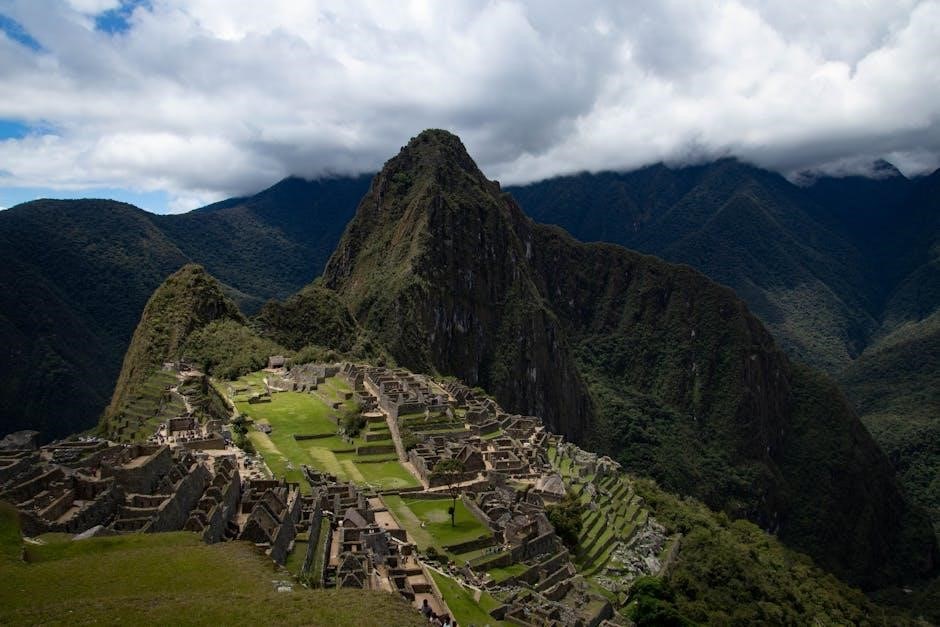
The Indus Valley Civilization, revealed through 1920s excavations, boasts cities built with standardized bricks, documented in resources like Marshall’s 1931 volume and modern publications.
Historical Context & Rediscovery
For centuries, the Indus Valley Civilization remained largely unknown, its existence hinted at only through scattered artifacts and local legends. Initial awareness stemmed from the work of Charles Masson in the 19th century, but systematic investigation began in the 1920s.
The rediscovery truly commenced with excavations at Harappa, led by Daya Ram Sahni, and shortly after, at Mohenjo-daro, under R.D. Banerji. Sir John Marshall’s comprehensive 1931 publication, “Mohenjo-daro and the Indus Civilization Vol-i,” became foundational.
These excavations revealed a sophisticated urban culture predating previously known Indian civilizations, prompting extensive research documented in resources available through the Internet Archive and contemporary historical texts, like those from History, Hourly.
Geographical Extent of the Indus Valley
The Indus Valley Civilization flourished across a vast geographical area, primarily in modern-day Pakistan and northwest India, extending into parts of Afghanistan and Iran. Its heartland centered around the Indus River and its tributaries, encompassing the fertile plains of Punjab and Sindh.
This region experiences moderate rainfall, ranging from 125 to 625 mm annually, as noted in ISBN 978-92-3-102719-2. The northern hills received higher precipitation, supporting forested belts and grasslands for livestock.
The civilization’s reach extended over 1,500 kilometers, encompassing diverse landscapes and facilitating extensive agricultural production of wheat, barley, and oats, as well as supporting animal domestication.

Key Sites of the Indus Valley Civilization
Significant sites like Mohenjo-daro, Harappa, and Dholavira reveal advanced urban planning, unique water systems, and early discoveries, documented in available PDFs.
Mohenjo-daro: Urban Planning & Architecture
Mohenjo-daro exemplifies meticulous urban planning within the Indus Valley Civilization. Archaeological records, including Marshall’s 1931 publication available as a PDF, detail a city constructed with standardized brick sizes, indicating centralized control and advanced engineering. The layout featured a grid pattern, suggesting thoughtful organization and efficient resource management.
Remarkable architectural features included sophisticated drainage systems – a hallmark of Indus urbanism – and the iconic Great Bath, possibly used for ritualistic purposes. Large granaries point to organized food storage and distribution. These elements, thoroughly documented in accessible PDFs and historical accounts, demonstrate a highly developed and sophisticated society capable of large-scale construction and civic organization.
Harappa: Early Discoveries & Significance
Harappa holds immense significance as one of the first sites revealing the Indus Valley Civilization to the modern world. Archaeological expeditions in the 1920s, detailed in accessible PDFs like those from the Internet Archive, unearthed evidence of a previously unknown urban culture. The discovery of Harappa fundamentally shifted understandings of ancient South Asian history.
Early excavations revealed standardized brick structures, intricate seals, and a sophisticated urban layout. These findings, documented in historical texts and digital resources, demonstrated a level of societal organization previously unassociated with the region. Harappa’s importance lies not only in its physical remains but also in initiating the broader exploration and understanding of the Indus Civilization.
Dholavira: Unique Water Management System
Dholavira stands out amongst Indus Valley sites for its remarkably advanced water conservation system. Archaeological evidence, accessible through online PDFs and research archives, reveals a sophisticated network of reservoirs, dams, and channels designed to collect and manage rainwater. This system was crucial in a region with limited rainfall, averaging between 125 to 625 mm annually, as noted in related Indus Civilization studies.

The site’s elaborate stone-built reservoirs demonstrate a deep understanding of hydraulic engineering. This innovative approach to water management allowed Dholavira to thrive in a semi-arid environment, supporting a substantial population and agricultural practices. The system’s complexity highlights the ingenuity of the Indus people.
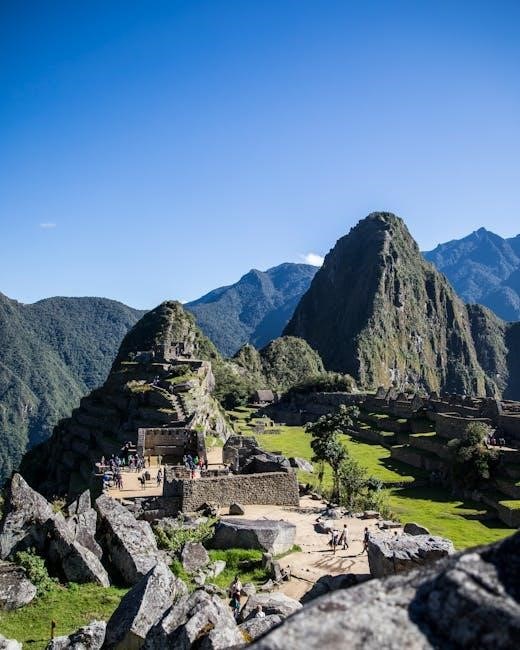
Urban Planning and Infrastructure
Indus cities, detailed in available PDFs, showcased remarkable urban planning—grid patterns, standardized bricks, and advanced drainage, indicating a highly organized society.
Grid Pattern & Standardized Brick Sizes
The Indus Valley Civilization’s urban centers, meticulously documented in archaeological reports and accessible PDFs, demonstrate a sophisticated understanding of city planning. A defining characteristic is the implementation of a precise grid pattern for streets, suggesting centralized planning and administrative control. This orthogonal layout facilitated efficient movement and organization within the cities.
Furthermore, the consistent use of standardized brick sizes across different settlements—detailed in publications like Marshall’s 1931 work—highlights a remarkable level of uniformity and coordination. These bricks, often baked to a durable consistency, were used in constructing homes, public buildings, and infrastructure, showcasing advanced engineering skills and resource management. The standardization facilitated efficient construction and contributed to the overall structural integrity of the cities.
Advanced Drainage Systems
The Indus Valley Civilization possessed remarkably advanced drainage systems, a testament to their public health consciousness and engineering prowess, extensively detailed in archaeological PDFs and historical analyses. Unlike contemporary urban centers, Indus cities featured sophisticated networks of covered drains constructed from precisely laid bricks.
These drains ran alongside streets, collecting wastewater from individual houses and channeling it away from the urban core. Inspection chambers were strategically placed to allow for cleaning and maintenance, preventing blockages and ensuring efficient operation. This elaborate system minimized the risk of waterborne diseases and contributed to the overall sanitation of the cities, demonstrating a level of urban planning unparalleled for its time, as evidenced by resources like Wheeler’s publications.
Public Baths & Granaries
Indus Valley Civilization sites, documented in numerous archaeological PDFs, reveal a focus on communal hygiene and food security. The “Great Bath” at Mohenjo-daro stands as a prime example of their public bathing facilities – a large, brick-lined pool potentially used for ritualistic cleansing or social gatherings. Its waterproofed construction highlights advanced engineering skills.
Alongside these, substantial granaries were discovered at sites like Harappa and Mohenjo-daro. These structures, often located near riverbanks for easy transport, were used to store surplus grain, indicating a well-organized agricultural system and a centralized authority capable of managing resources. The size of these granaries suggests a complex system of collection, storage, and distribution, vital for sustaining the urban population, as detailed in Marshall’s work.

Economy and Trade
The Indus Valley’s economy, detailed in available PDFs, thrived on agriculture, animal domestication, and extensive trade networks reaching Mesopotamia, utilizing standardized weights.
Agriculture and Domestication of Animals
Agricultural practices formed the bedrock of the Indus Valley Civilization’s economy, as evidenced by archaeological findings detailed in numerous PDF resources. The fertile, flooded plains yielded abundant harvests of wheat, barley, and oats – staples of their diet.
Beyond crop cultivation, the Indus people skillfully domesticated animals. While sheep and goats were prevalent in Western Asian civilizations, cattle held particular importance within the Indus Valley. Grasslands in the hilly regions supported sheep, goats, and cattle, providing essential resources like milk, meat, and hides. This combination of agriculture and animal husbandry ensured a stable food supply and supported a growing population, contributing significantly to the civilization’s prosperity, as documented in historical analyses.

Trade Networks: Mesopotamia & Beyond
Extensive trade networks were crucial to the Indus Valley Civilization’s economic success, as detailed in accessible PDF documents and archaeological reports. Evidence suggests robust connections with Mesopotamia, facilitating the exchange of goods and ideas. These networks weren’t limited to a single region; the Indus people engaged in commerce extending beyond Mesopotamia, though the full extent remains under investigation.
Standardized weights and measures, a hallmark of Indus planning, streamlined trade transactions. Goods likely exchanged included agricultural products, raw materials, and crafted items. This interconnectedness fostered cultural exchange and economic growth, demonstrating the Indus Valley’s sophisticated organizational capabilities and its prominent role in the ancient world’s commercial landscape, as revealed through scholarly PDFs.
Standardized Weights and Measures
A remarkable feature of the Indus Valley Civilization was its sophisticated system of standardized weights and measures, extensively documented in archaeological PDFs and research papers. This uniformity, based on a binary and decimal system, facilitated fair trade and efficient administration across their vast territory.
Cubes made of chert, displaying precise measurements, served as weights. These standardized tools suggest a centralized authority capable of enforcing consistency. Such a system was vital for regulating commerce, particularly with distant regions like Mesopotamia, as detailed in available PDF resources. This meticulous approach to measurement underscores the Indus people’s advanced mathematical and organizational skills, contributing to their economic prosperity and societal stability.
Religion and Beliefs

Indus Valley religion, explored in available PDFs, included depictions like the Pashupati seal—potentially a proto-Shiva—and numerous Mother Goddess figurines, hinting at core beliefs.
The Pashupati Seal & Proto-Shiva
The Pashupati seal, a key artifact detailed in Indus Valley Civilization PDFs, depicts a seated figure, often interpreted as a prototype of the Hindu god Shiva. This figure is surrounded by animals – elephants, tigers, rhinoceros, and buffalo – and appears to be wearing a horned headdress.
Scholars debate the precise meaning, with some suggesting it represents a yogic posture or a deity associated with animals and fertility. The seal’s imagery, found extensively in archaeological reports and digital resources, offers a glimpse into the religious beliefs of the Indus people. It’s a crucial piece in understanding their potential connections to later Hindu traditions, though definitive interpretations remain elusive due to the undeciphered Indus script.
Mother Goddess Figurines
Numerous terracotta Mother Goddess figurines have been unearthed at Indus Valley sites, extensively documented in archaeological PDFs and reports. These figures, often stylized with exaggerated hips and breasts, suggest a reverence for fertility and the feminine principle. Their prevalence indicates a significant role for female deities within Indus religious practices.
Variations in style and ornamentation exist, hinting at regional differences or evolving beliefs. Some figurines are adorned with elaborate headdresses and jewelry, while others are simpler in form. These artifacts, readily available in online archaeological databases, provide valuable insights into the spiritual world of the Indus people, though their precise function – whether as objects of worship or symbolic representations – remains a subject of scholarly debate.
Possible Ritualistic Practices
Reconstructing Indus Valley religious practices remains challenging due to the undeciphered script, but archaeological evidence suggests several possibilities. The “Great Bath” at Mohenjo-daro hints at ritual purification, while numerous fire altars indicate fire worship. Analysis of seals and figurines, detailed in accessible PDFs, points towards potential animal sacrifices and veneration of nature.
The presence of specific pottery types exclusively found near ritual sites further supports the idea of dedicated ceremonial spaces. Though concrete proof is elusive, the consistent motifs and symbolic imagery across various sites suggest a shared belief system. Scholarly interpretations, often found in digitized archaeological reports, propose connections to later Hindu traditions, though definitive links remain speculative.
Decline and Fall of the Indus Valley Civilization
The Indus Valley’s decline, detailed in accessible PDFs, likely stemmed from complex factors—environmental shifts, potential climate change, and debated theories regarding migrations.
Theories Regarding Environmental Changes
Numerous theories propose environmental changes as key contributors to the Indus Valley Civilization’s decline, readily explored within accessible PDF resources detailing archaeological findings. Shifts in monsoon patterns, documented in studies, potentially led to decreased rainfall, impacting agricultural productivity across the fertile plains.
Evidence suggests increased aridity, possibly exacerbated by deforestation from brick production, strained water resources and agricultural yields. The Ghaggar-Hakra river system, once vital, may have dried up or significantly altered its course, disrupting settlements. These ecological stresses, combined with potential seismic activity, could have triggered widespread societal disruption and ultimately, the civilization’s fragmentation, as outlined in scholarly PDFs.
Possible Aryan Invasion Theory
The Aryan Invasion Theory, historically prominent but now largely debated, posited that Indo-Aryan migrations contributed to the Indus Valley Civilization’s decline; Early interpretations, detailed in older PDF resources like Wheeler’s work, suggested conflict and displacement. However, current archaeological evidence offers a more nuanced perspective.
Modern scholarship, accessible through updated PDFs, increasingly favors a model of cultural exchange and assimilation rather than outright invasion. While migrations likely occurred, the impact wasn’t necessarily violent conquest. Environmental factors and internal societal shifts are now considered more significant drivers of change. The theory remains a complex topic, continually re-evaluated with new discoveries and analyses presented in academic PDFs.

Impact of Climate Change
Climate change is increasingly recognized as a crucial factor in the Indus Valley Civilization’s decline, detailed in numerous accessible PDFs. Shifts in monsoon patterns, documented through paleoclimatic studies, likely led to prolonged droughts and reduced agricultural productivity.
Decreased rainfall would have severely impacted the civilization’s sophisticated irrigation systems and agricultural base, exacerbating existing societal stresses. Evidence suggests changes in river courses, potentially due to tectonic activity combined with altered rainfall, disrupted trade routes and water supplies. PDFs analyzing sediment cores and ancient pollen reveal a gradual environmental deterioration, contributing to urban abandonment and societal fragmentation, rather than a sudden catastrophic event.